In honor of Haiku Tuesday – here is the latest Nonprofit Tip (and poem) for you. Please enjoy!

In honor of Haiku Tuesday – here is the latest Nonprofit Tip (and poem) for you. Please enjoy!
Hello nonprofit geek nation! It is #haikutuesday and time for the weekly tip for your nonprofit organization and poem all in one! Enjoy!

I recently took a trip to visit family. They live in a large city. The trip was during the hottest time of the year. There is something about the lack of trees, the reflection of the sun on windows and concrete and riding hot public transportation with hundreds of equally sweaty people that can make me feel like I am being forced to listen to fingernails on a chalkboard.

Hot bus, summer in the city
In the middle of one of these hot afternoons, I found myself on a city bus on my way back to my family’s apartment. Trying to forget about my aching feet and beads of sweat that would not go away, I closed my eyes. However, my attempts at finding a moment of zen were harshly and frequently interrupted. Every few blocks when the bus driver would open the doors to let people on and off (and keep the doors open for some unknown reason), there was a seemingly-endless round of the following noises:
I expected the bus driver make a general announcement: “stop repeatedly pressing the stop requested button!” No announcement – the dings continued. I expected a bus rider to yell “stop repeatedly pressing the stop requested button!” No yelling – the dings continued.
I decided this out-of-towner needed to take matters into her own hands. I looked around the bus to see if I could send the “stop repeatedly pressing the button” message to someone. I determined the culprit. It was not what I expected. I expected that someone was knowingly bothering the bus or that a technical glitch was happening. What I discovered was neither.
A boy (about 13 years old) was holding one of the polls where the waist-level “stop requested” buttons was located. He was mindlessly and obliviously doing what I could only call the “belly bump” with the “stop requested button.” He was riding solo, so he was not trying to impress his friends with his “belly pressing” skills. I believe on this hot day he had found his own moment of zen in his mindless swaying and leaning. However in his zen state, his ears had become temporarily disconnected.
These discoveries happened in a matter of seconds for me, so for the next few seconds I tried to imagine the scenarios in which the annoying noises would stop. As I mentioned, no announcements or communications were being made to the boy. I was pretty far away from him, so I did not want to scar him for life by yelling across the bus “Hey kid, your belly is ringing the bell. Cut it out!” I did mumble to the guy next to me “that kid’s belly is ringing the bell” in hopes that my seat-mate would have less compunction about yelling something to the boy (he did not). I had an idea that people who live here should take action first, as opposed to an out-of-towner like me. I wanted to do something – but I felt pretty helpless…and irritated.*
The bystander effect
After I got off the bus, I got a flashback from freshman year psychology 101 class. We learned about the ‘bystander effect.’ This term describes a psychological phenomenon when individuals do not offer to help a victim when other people are present. And generally, the more bystanders, the less likely it is that any one of them will help. One explanation for this is that people feel the responsibility is diffused when others are around.
It was clear that no one (not even me) stepped forward to stop that boy from ringing the bell with his stomach. Maybe this was an example of the bystander effect (albeit there was no real harm being done, which is perhaps why none of us stopped the boy. Plus many of us may have thought that stopping the boy would cause harm through embarrassment to the boy. So this situation was ambiguous in those ways). Nevertheless, since I had this occasion to think about the bystander effect – I started applying it to my life as a nonprofit geek.
Kudos to you
It occurred to me that people who work for nonprofit organizations are not bystanders. Each one has jumped in to help; to right a societal wrong; to work on making the world a better place. You have made altruistic and activist choices – and I am giving a big nonprofit geek standing ovation to you for that. Hooray for you!
And there is something else that has earned you bigtime geek points from this nonprofit geek. Your activism has compelled you to learn ways to help even more! (You are reading this blog, aren’t you?) As Dacher Keltner, Ph.D. of the Greater Good Science Center says:
“… much of the bystander research suggests that one’s personality only determines so much. To offer the right kind of help, one also needs the relevant skills or knowledge demanded by a particular situation.”
So feel good! Feel good for helping (and not standing by) and for learning more ways to help. You are making the world a better place – with more bus rides of zen and less annoying ‘dings.’ Thank you for your work with nonprofit organizations.
*So what did I do? I pulled out my cell phone and recorded it so I could maybe smile about it later.

Photo Credits:
Brett Weinstein, Sundown on a City.
Howard Brier, Coney Island and Brighton Beach
Questions:
What would you have done on this bus trip?
Do repeated noises bug you too? Or is it just me?
You have made cash donations to charities. You have probably thought about how those nonprofits are spending the dollars you give. But you trust them to use your donation wisely (otherwise you probably would not have given).
In your mind, you might picture the organization using your money to buy cans of soup or bandages or other items to help those in need. How would you feel if your donation was used to buy advertising for the charity, to pay for the nonprofit’s fundraising activities or for other ‘overhead’ costs? Would you feel your donation was wasted?
Overhead Costs
There are two conflicting opinions on the question of overhead. Briefly summarized, they are:
Charity Watchdogs
There are a number of charity watchdog groups that help people decide how to donate their money. Charity Watch is one such group that takes the first position (the less a charity spends on overhead costs, the better). In fact, a nonprofit’s spending is a big factor in the rating Charity Watch gives. If a charity spends 36% or more on overhead costs, that organization will receive an efficiency grade of C+ or lower (all the way down to an F).
Charity Defenders
A number of people and organizations are starting to speak out on the other side of the “overhead” question. The founder of the AIDS Ride and self-described “Charity Defender” Dan Pallotta gave a TED Talk (that garnered over 3.5 million online views) supporting the second opinion (A nonprofit’s effectiveness at solving social problems is more important than the amount it spends on overhead).
In this TED Talk (titled “The way we think about charity is dead wrong”) Pallotta says “…the next time you’re looking at a charity, don’t ask about the rate of their overhead. Ask about the scale of their dreams, their Apple-, Google-, Amazon-scale dreams, how they measure their progress toward those dreams, and what resources they need to make them come true, regardless of what the overhead is.”
Define “a wasted donation”
This is a fascinating debate, and I encourage you to visit Charity Watch’s web site to see how they calculate their ratings and I encourage you to take a look at Dan Pallotta’s TED Talk to hear more about his experiences and thoughts about overhead. Taking a look at these positions may even change your definition of a “wasted donation.”

My position on this is closer to Pallotta’s than to Charity Watch’s. Although it makes my stomach hurt to watch reports on 60 Minutes about charities that abuse the trust of donors by pocketing donations for the personal benefit of the administrators instead of serving those in need, I think that a Charity Watch-type black and white grading system is not the solution. How a nonprofit achieves its mission is a nuanced road – and as Pallotta points out, there are some “unwritten” rules that need to be rethought. I believe, for example, that one “rule” is that grant funds should not be given for overhead costs. As a grant writer, I have seen this rule backfire. I have seen, too often, a nonprofit decision-maker hope that creating a new (and unneeded) program will somehow obtain a sliver of funding for vital overhead costs. Trying to “game” the system in this way demonstrates that there are many “unwritten” standards constraining the work of nonprofit organizations. And if a nonprofit is constrained, how can it achieve its mission?
Questions: What goes into your decision to make a donation? Have you consulted Charity Watchdog ratings? If so, what did you think?
When you think of people who chose to work for nonprofit organizations, what comes to mind? You probably picture someone with a big heart.

But a big heart is not the only requirement to for helping others. If you fill your brain with tips and specialized nonprofit knowledge, you can help even more people. There are a number of organizations in Austin that provide excellent assistance to community sector professionals. But there are three that I “geek out” at when I visit them or take a class from them – and I think you will too.
Center for Nonprofit Studies at Austin Community College (CNS @ ACC)
Check out CNS @ ACC’s web site for their list of services. But as a nonprofit geek, I’d like to focus here on their learning opportunities. I have enjoyed offerings such as grant writing, social media, and team-building. One thing I like is that they have classes of various lengths and price-ranges. I have seen free brown bag lunchtime offerings and I have seen multi-week classes culminating in a certificate. There is something for every nonprofit professional at CNS @ ACC.
The Regional Foundation Library (RFL) at the University of Texas at Austin
Do you ever wonder what the secret to obtaining grant funding is? Stopping by the RFL is the first step toward finding out. For more than 50 years, the RFL has served as a bridge between the grant-seeking and the grant-making communities. The staff at the RFL can answer your questions about ways to approach grant giving organizations. But this geek’s favorite tool at the RFL is the Foundation Directory Online Database. You can use it to search for the foundations that are most likely to give you grants. The RFL staff can coach you on the best way to use the Foundation Directory Online and their other free tools.
Greenlights’ mission is to strengthen nonprofits for extraordinary performance and impact. This 501(c)3 organization provides management consulting services, professional development, customized training, in-depth research and more. Visit their site for examples of what you can learn; but one example of a recent Greenlights research report is On the Verge: Value and Vulnerability of Austin’s Nonprofit Sector. This study reports the surprising facts that: Austin is home to nearly 6,000 nonprofits – but 72% have less than $100K in income – and less than 15% have ANY paid staff.
If you start building your knowledge of how to help a nonprofit organization succeed, then visit any or all of these resources – and tell them the Greater Good Geek sent you.
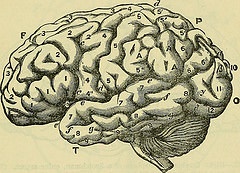
Fill your brain with information about nonprofit organizations – Resources:
Center for Nonprofit Studies at Austin Community College (formerly known as Center for Community Based and Nonprofit Organizations – CCBNO): 5930 Middle Fiskville Rd, #414, Austin, TX 78752, (512) 223-7051; http://sites.austincc.edu/npo/
The Regional Foundation Library: At UT’s Community Engagement Center, 1009 East 11th St., Austin, TX. A call is recommended before visiting: (512) 475-7373′ http://ddce.utexas.edu/foundationlibrary/
Greenlights (formerly known as Greenlights for Nonprofit Success): 8303 N MoPac Expy Suite A201, Austin, Texas 78759, (512) 477-5955; http://www.greenlights.org/
Questions:
Have you used any of these resources? If so, what did you think? Are there other resources that you have found helpful?
Image Credits: S. Erler (first image); Internet Archive Book Images (second image).
Independence. This weekend, as the U.S. celebrates our independence, is a great time to examine this word. It can mean different things to different groups of people. Many senior citizens, for example, value the independence that living at home brings. There is a high loss of independence if health and mobility require someone to move away from home to an assisted living facility.
Focus on Nonprofit Organizations: Capital City Village
The Greater Good Geek blog will occasionally feature a nonprofit organization and “geek out” with a food for thought “case study.” Today’s edition focuses on an organization called Capital City Village. Capital City Village is an Austin, Texas-based nonprofit organization dedicated to helping seniors stay in their homes and communities for as long as possible (a concept called aging in place and community). In other words, the organization supports the independence of senior citizens.
What Nonprofit Leaders Can Learn
This Independence-based nonprofit organization teaches us is how important it is for nonprofit leaders to be in tune with changing demographics. There will be cases when new nonprofit options need to be created to address population trends – and this is one of them.
The Growing Needs of Baby Boomers
The Baby Boom is one of those population trends that cannot be ignored by the community sector. The influence of Baby Boomers stems in part by the size of the group: there are currently 78 million boomers in the U.S. and 8,000 boomers are turning 65 every day (Source: How Baby Boomers Are Changing Retirement Living, Washingtonian, March 13, 2014).

Seniors Value Their Independence
The “traditional” retirement options (assisted living, retirement communities) are not fitting the needs of today’s senior citizens. Many want to age at home, retaining independence and saving money. This is where nonprofit leaders saw a trend and Capital City Village (CCV) was created. Founded in 2010, CCV gives seniors access to volunteers, service providers and social and educational programs – helping them age in place.
This Geek’s Case Study
So the Geek’s “case study” lessons for nonprofit leaders are: keep your finger on the pulse of demographic trends, notice needs in your community, shift the focus of your organization (or start a new organization) to address a need that has not been addressed yet.

Questions:
What are some of the recent trends in your community? Do you see a population growth that needs services? Is there a recent community need that a nonprofit organization could better address? Do you have ideas about how those needs could be addressed? Do you have experience with a nonprofit organization that started a new program for the purpose of addressing a new population trend? If so, please share details.
Image credits: Flip Schulke, The U.S. National Archives (first image). Thomas Abercrombie, Internet Archive Book Images (second image).
Many of you know computer geeks or math geeks. But have you ever met a nonprofit geek?
“Just what do you mean by a ‘nonprofit geek’?”
Picture the computer geeks you know – what are they like? They could spend hours thinking about computers, right? The math geeks could tell you the difference between the K Theory and the Algebraic K Theory. (I agree: snore).
They know their stuff
The bottom line is, just like the other geeks you know, nonprofit geeks know their stuff – about nonprofit organizations.
Geek Images
And what other images does the word geek bring up for you? Are you picturing a smooth Casanova used car salesperson-type. No way!
Not a wolf in sheep’s clothing

A geek is someone who is most interested in facts, truth and accuracy – and being approachable about it. Once you got to know those geeks in high school, they turned out to be nice, welcoming and loyal, didn’t they? Plus, if you invited them to a party they would help you with your homework too.
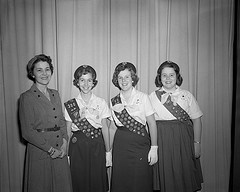
Like trusted scouts
So a nonprofit geek is an approachable expert about the community sector – someone who wants to be helpful.
—
Image Credits: J.W. Barber (first image); Adolph B. Rice Studio (second image).
Blog questions: what do you think of when you hear “nonprofit geek?” Do you imagine someone helpful and knowledgeable? Have you ever known a nonprofit geek? And if so, what were they like?
 greater good geek